

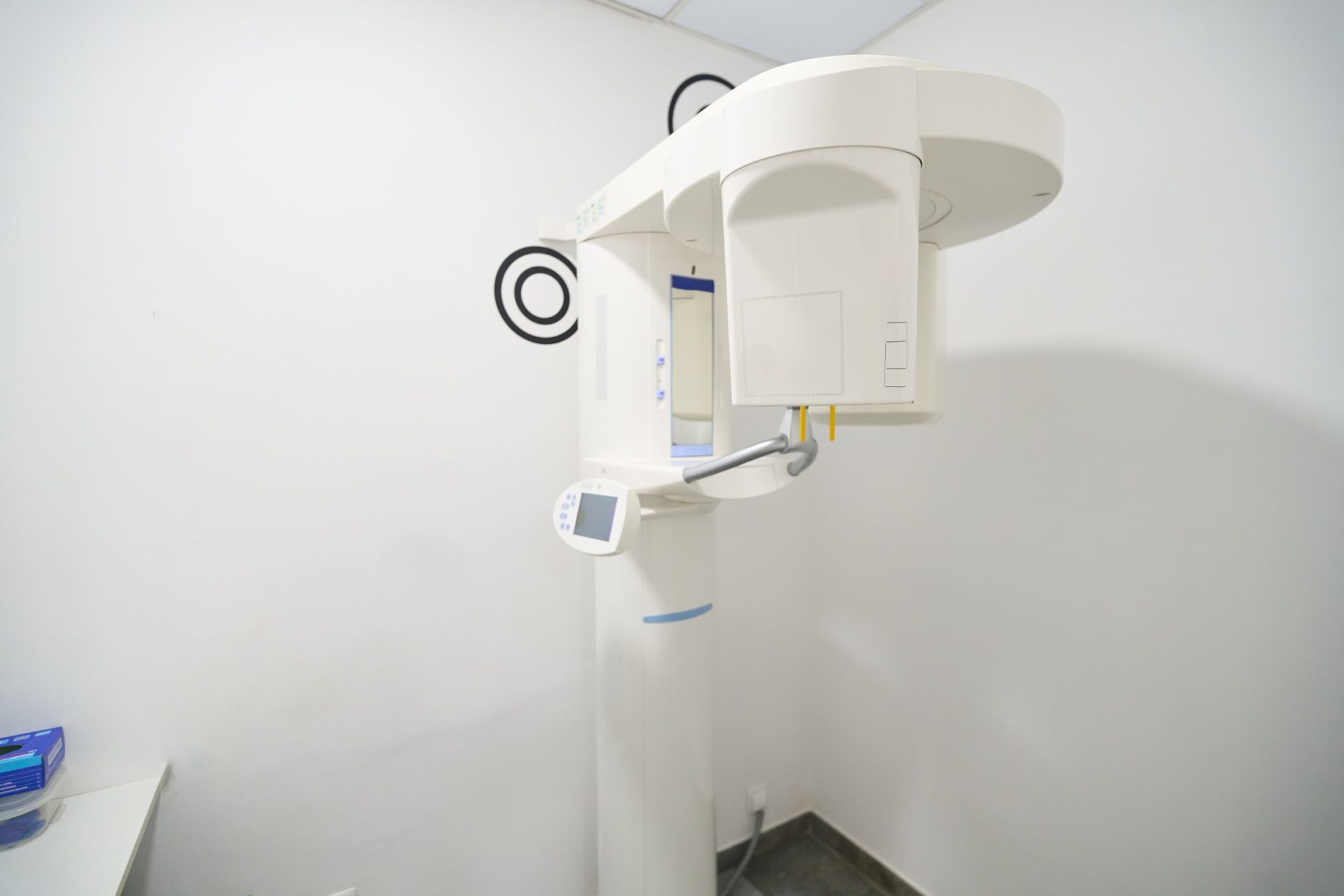
A missing tooth or a complex bite issue can feel like a puzzle with too many hidden pieces. Traditional two-dimensional X-rays show shape and shadow, but they cannot reveal the true depth of your jawbone, the exact position of a nerve canal, or the density of bone at a potential implant site. Without that information, treatment planning becomes an educated guess rather than a precise roadmap, and guesswork is the last thing you want when it comes to your smile.
At Kabani Dental, we invest in advanced technology so every treatment decision is grounded in real, measurable data, not assumptions. Our 3D CBCT imaging captures a detailed three-dimensional view of your teeth, jawbone, and surrounding structures in a single scan, giving us the clarity we need to plan implants and other advanced procedures with confidence.
What Makes 3D CBCT Imaging Different From Traditional X-Rays?
Cone beam computed tomography, or CBCT, rotates a scanner around your head and captures hundreds of images that a computer then compiles into a single three-dimensional model. Instead of a flat picture, we get a volumetric map of your bone, sinuses, nerve pathways, and tooth roots from every angle.
This matters most when the margin for error is small. Bone thickness, bone density, and the proximity of the inferior alveolar nerve or sinus cavity all affect whether an implant site is viable and how to approach it. A 2023 study published by the National Center for Biotechnology Information found that CBCT scans provide substantially more accurate measurements of alveolar bone thickness and root angulation than conventional imaging, information that directly shapes how a case for dental implants should be planned. We rely on that same level of detail before recommending treatment.
How 3D Imaging Guides Dental Implant Planning
Every implant case is different because every patient’s anatomy is different. Once we capture a CBCT scan, we can evaluate the exact height and width of available bone, identify the safest path around nerves and sinuses, and determine whether a site is ready for an implant or would benefit from additional support first. This is part of why we offer computer-guided surgery for many of our implant patients, because the same imaging data that informs our diagnosis can also guide precise placement during the procedure itself.
For patients being considered for bone grafting with dental implants, CBCT imaging helps us determine whether the existing bone can support an implant on its own or whether grafting should be part of the plan. We only recommend grafting alongside an extraction or implant placement, never as a standalone procedure, and 3D imaging gives us the specific measurements needed to make that call with confidence rather than estimation.
Diagnostic Value Beyond Dental Implant Planning
While implant planning is one of the most common reasons we recommend a CBCT scan, the technology has diagnostic value well beyond that single use. A three-dimensional view can reveal issues that a traditional X-ray might miss entirely, including impacted teeth, unusual root formations, or early signs of bone loss around existing teeth.
For patients dealing with jaw pain or bite irregularities, this same imaging can also support evaluation for TMJ treatment, because understanding how the jaw joint and surrounding bone are positioned is an important part of building an effective treatment plan. We do not use CBCT for routine comprehensive exams, but when a case calls for a deeper look, this technology gives us information that changes how we approach care.
Schedule Your 3D CBCT Consultation for Dental Implants at Kabani Dental
The value of 3D CBCT imaging comes down to certainty. Instead of relying on a two-dimensional picture and filling in the gaps with experience alone, we can see the full three-dimensional picture before a single instrument touches your mouth. That means fewer surprises during treatment, a plan built around your specific anatomy, and greater confidence for both our team and you.
If you are considering dental implants or have been told you may need advanced diagnostic imaging, we would like to walk you through what a CBCT scan can reveal about your unique case. Our team at Kabani Dental combines Dr. Shaila Kabani’s more than 20 years of experience with imaging technology that turns treatment planning into a precise, personalized process. Contact our office to schedule a consultation and find out whether 3D CBCT imaging is the right next step for your care.