

Medically Reviewed by Dr. Shaila Kabani on September 24, 2026
Most dental visits address one problem at a time, a single filling, a crown on a tooth that broke, a cleaning that catches early issues before they grow. But for some patients, the picture is more complicated. Years of untreated decay, chronic grinding, gum disease, multiple missing teeth, or a bite that has shifted so far from its original position that the jaw muscles are constantly compensating, these are not problems that respond to piecemeal treatment. They require a different kind of approach entirely.
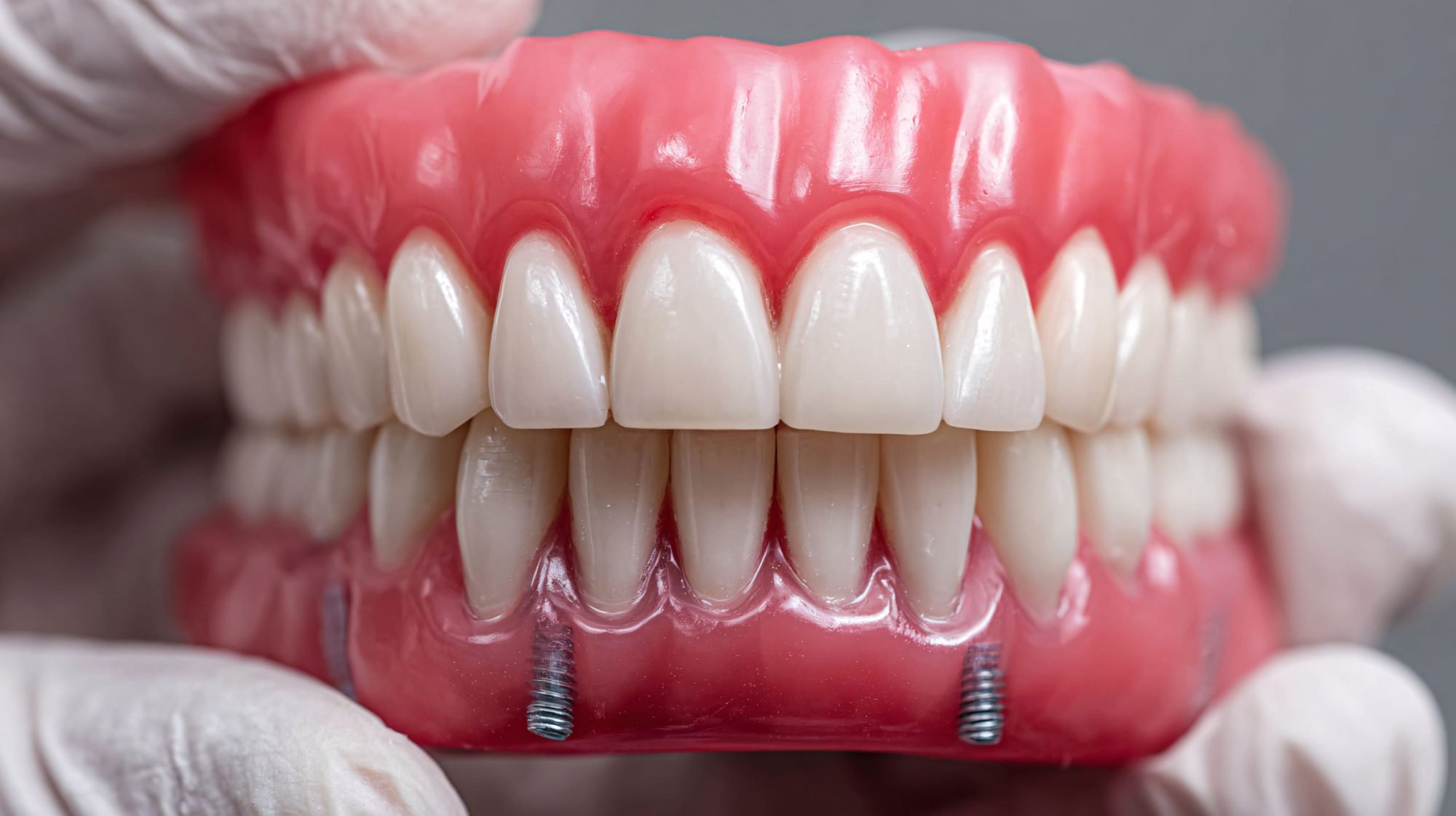
Full mouth reconstruction, also called full mouth rehabilitation, is a comprehensive treatment process designed to restore function, structural integrity, and aesthetics across all or most of the teeth simultaneously. It is one of the most demanding and most rewarding categories of care in dentistry, and it produces outcomes that individual tooth treatment, no matter how skillfully performed, simply cannot replicate on its own.
What Makes a Case a Full Mouth Reconstruction Case?
The defining characteristic of full mouth reconstruction is that multiple systems are failing at the same time and addressing them in isolation would either be clinically ineffective or produce a result that does not hold up long-term. A patient who needs three crowns, two implants, and a bridge on the same arch is not necessarily a full mouth reconstruction patient. A patient whose bite has been compromised by years of wear, whose jaw joints are stressed because the vertical dimension of the bite has collapsed, and whose remaining teeth are failing at different rates across both arches — that patient is.
Common clinical presentations that warrant a full mouth reconstruction approach include the following:
- Severe generalized tooth wear from bruxism, acid erosion, or a combination of both, where multiple teeth have lost significant structure and the bite has shortened
- Multiple missing teeth distributed across one or both arches, causing neighboring teeth to shift, opposing teeth to over-erupt, and the bite to become progressively more unstable
- Advanced gum disease with bone loss that has compromised the support structure of many teeth, requiring both periodontal treatment and restorative rebuilding
- Failed or failing restorations throughout the mouth, where previous crowns, bridges, or other work has reached the end of its functional life simultaneously
- Occlusal dysfunction involving the temporomandibular joints (TMJ) or surrounding musculature, where the way the teeth come together is actively contributing to pain, wear, or structural breakdown
A 2024 article published via the National Institutes of Health on full mouth rehabilitation using advanced interdisciplinary concepts identifies occlusal analysis and comprehensive treatment sequencing as foundational to successful outcomes, noting that restoring individual teeth without addressing the broader bite system is a primary reason complex cases fail to achieve durable results.
The Role of Occlusion in Complex Cases
Occlusion, how the upper and lower teeth contact each other during biting and chewing, is the organizing principle of full mouth reconstruction. In a healthy bite, forces are distributed evenly across the arch, the temporomandibular joints are positioned correctly, and the muscles of the jaw work efficiently without chronic strain. When occlusion breaks down, those forces concentrate on individual teeth and joints, accelerating wear and making any restoration placed in that environment vulnerable to the same forces that destroyed the original teeth.
This is why experienced clinicians approach full mouth reconstruction with an analysis of the bite system before planning any individual restorations. The goal is not to replace each failed tooth one by one with a new crown or implant but to rebuild the entire bite at a stable, functional position that protects both the new restorations and the patient’s jaw joints for the long term.
For patients with significant wear or collapse of the bite’s vertical dimension, this often means rebuilding to a planned new vertical dimension, essentially restoring height to the bite that has been lost over time. This requires careful pre-treatment analysis, diagnostic mock-ups, and often a period of wear testing with a provisional or splint before final restorations are placed.
TMJ Considerations in Full Mouth Reconstruction
The temporomandibular joints are the hinges on either side of the jaw that allow the mouth to open, close, and move side to side. In patients with severe wear or long-standing bite dysfunction, these joints are often stressed, inflamed, or positioned in a way that creates chronic discomfort. Before any final restorations can be placed, the joints must be evaluated and, when indicated, stabilized.
TMJ splint therapy is a critical part of full mouth reconstruction for patients with joint involvement. A precisely fitted splint positions the lower jaw at a therapeutic rest position, allowing the muscles and joints to decompress and settle before the dentist establishes where the final bite will live. In some cases, splint therapy reveals that the patient’s comfortable jaw position is quite different from where their teeth currently close, which directly informs how the final restorations need to be designed. A night guard or TMJ splint in this context is not just a protective appliance but a diagnostic tool that shapes the entire reconstruction plan.
How Full Mouth Reconstruction Is Sequenced
Because so many systems are involved, full mouth reconstruction is never completed in a single phase. The sequencing of treatment is part of the clinical skill that determines whether the final outcome holds up over time.
A typical sequencing framework moves through these phases:
Phase 1: Diagnosis and Stabilization
Comprehensive records are gathered, including 3D imaging, digital impressions, and bite analysis. Active disease, decay, gum disease, infection, is addressed before any restorative work begins. Teeth with a poor prognosis are evaluated for extraction. A 3D CBCT scan provides the spatial detail needed to plan implant positions, assess bone volume, and evaluate the joints with a level of accuracy that traditional X-rays cannot offer.
Phase 2: Foundational Treatment
Any extractions, bone grafting, or implant placement happens in this phase, along with periodontal treatment where needed. Implants are allowed to heal and integrate before the restorative phase begins.
Phase 3: Restorative Rebuilding
This is where custom crowns, dental bridges, and implant restorations are placed in a sequenced, coordinated manner that respects the planned bite position established earlier. CAD-CAM technology allows the restorations to be designed digitally with precise control over contours, bite contacts, and aesthetics before a single tooth is prepared, reducing the margin for error and allowing for digital verification of the outcome before fabrication.
Phase 4: Monitoring and Maintenance
Long-term success depends on how well the patient maintains the result and how consistently the outcome is monitored. Regular checkups track wear patterns, the health of the supporting tissues, and the continued stability of the bite.
Digital Technology’s Role in Modern Full Mouth Reconstruction
The shift toward digital workflows has changed what is achievable in complex reconstruction. Digital impressions eliminate distortion introduced by traditional putty molds, which matters significantly when multiple restorations need to fit together as a coordinated system rather than as individual units. Digital bite analysis can quantify where and how force is distributed across the arch. 3D printing allows for the fabrication of precise surgical guides, provisional restorations, and splints that give the dentist and patient a tangible preview of the final result before committing to irreversible steps.
For patients undertaking full mouth reconstruction, these tools reduce uncertainty, shorten appointment times, and produce final restorations with a level of fit and accuracy that directly supports the long-term durability of the outcome.
Am I a candidate for full mouth reconstruction?
Good candidates are patients with multiple teeth that are damaged, missing, severely worn, or affected by long-term bite dysfunction or gum disease. If a single procedure will not address the full scope of what is needed, a comprehensive reconstruction plan is often more effective and durable than treating each issue separately over many years.
How long does full mouth reconstruction take?
The timeline depends on the complexity of the case. A plan involving several crowns and implants may take six to twelve months. More involved cases that include bone grafting, TMJ stabilization, and staged restorations across both arches can span one to two years. Your care team will outline a realistic schedule after your initial comprehensive evaluation.
Is full mouth reconstruction covered by dental insurance?
Portions of treatment that are restorative in nature, such as crowns, extractions, and certain implant components, may be partially covered depending on your plan. Cosmetic elements are typically not covered. Our team can help you understand which aspects of your plan your benefits apply to before any work begins, so there are no financial surprises.
What is the difference between full mouth reconstruction and a smile makeover?
Full mouth reconstruction is driven by functional necessity, addressing teeth that are too damaged, missing, or structurally compromised to work properly. A smile makeover is primarily cosmetic, improving the appearance of teeth that are structurally sound. Many reconstruction cases incorporate cosmetic goals once the functional foundation has been established, so the two approaches are not mutually exclusive.
Is Full Mouth Reconstruction Right for You?
The most reliable way to find out whether your situation calls for a comprehensive reconstruction approach is to have a thorough evaluation with a dentist who has the training and clinical depth to assess the full bite system, not just individual teeth. The process begins with an honest conversation about what is failing, why it is failing, and what a stable long-term result actually requires.
If you have been managing multiple failing teeth, experiencing jaw pain or chronic headaches alongside dental problems, or have been told by multiple providers that your situation is complex, a comprehensive evaluation at Kabani Dental in Marietta, GA is a practical next step. Contact our office to schedule a consultation with Dr. Shaila Kabani, whose advanced training from the Pankey Institute and focused background in TMJ and full mouth rehabilitation positions her to evaluate your case with the depth and precision these situations require.
About the Author
Dr. Shaila Kabani
Kabani Dental, Marietta, GA
Dr. Shaila Kabani has been practicing dentistry since 2000 and has accumulated more than 300 hours of advanced clinical education. She and her team serve patients throughout Marietta, East Cobb, Vinings, and Smyrna, providing comprehensive general, cosmetic, and restorative dental care with a personalized approach at every appointment.