

Medically Reviewed by Dr. Shaila Kabani on September 24, 2026
You wake up with a sore jaw, a dull headache, or the vague sense that you were grinding your teeth all night, so you grab a boil-and-bite guard from the pharmacy and hope for the best. For some people, that may offer a little relief. For many others, it does almost nothing, and the underlying problem keeps getting worse.
The distinction between a custom TMJ splint and a store-bought night guard matters more than most patients realize. At Kabani Dental, we work closely with patients experiencing jaw pain, bite irregularities, and the effects of bruxism, and understanding which appliance is right for your situation is a critical first step. Our custom night guards and splints are designed with your specific anatomy and clinical needs in mind, not a generic mold off a warehouse shelf.
What an Over-the-Counter Night Guard Actually Does
A standard OTC night guard is designed to create a physical barrier between your upper and lower teeth. The premise is simple: if your teeth are separated by a layer of soft or semi-hard plastic, you may cause less damage when you clench or grind at night.
That is a reasonable goal, and for mild cases of bruxism with no underlying jaw dysfunction, a pharmacy guard may provide some temporary comfort. The problem is that most OTC guards are made from thermoplastic material that you soften in hot water and bite into to create a rough impression. The fit is approximate at best, and the material is usually too soft to hold up under consistent grinding pressure. Over time, a poorly fitting guard can actually shift your bite, cause muscle fatigue, or create new tension points rather than relieving existing ones.
What a Custom TMJ Splint Is Designed to Do
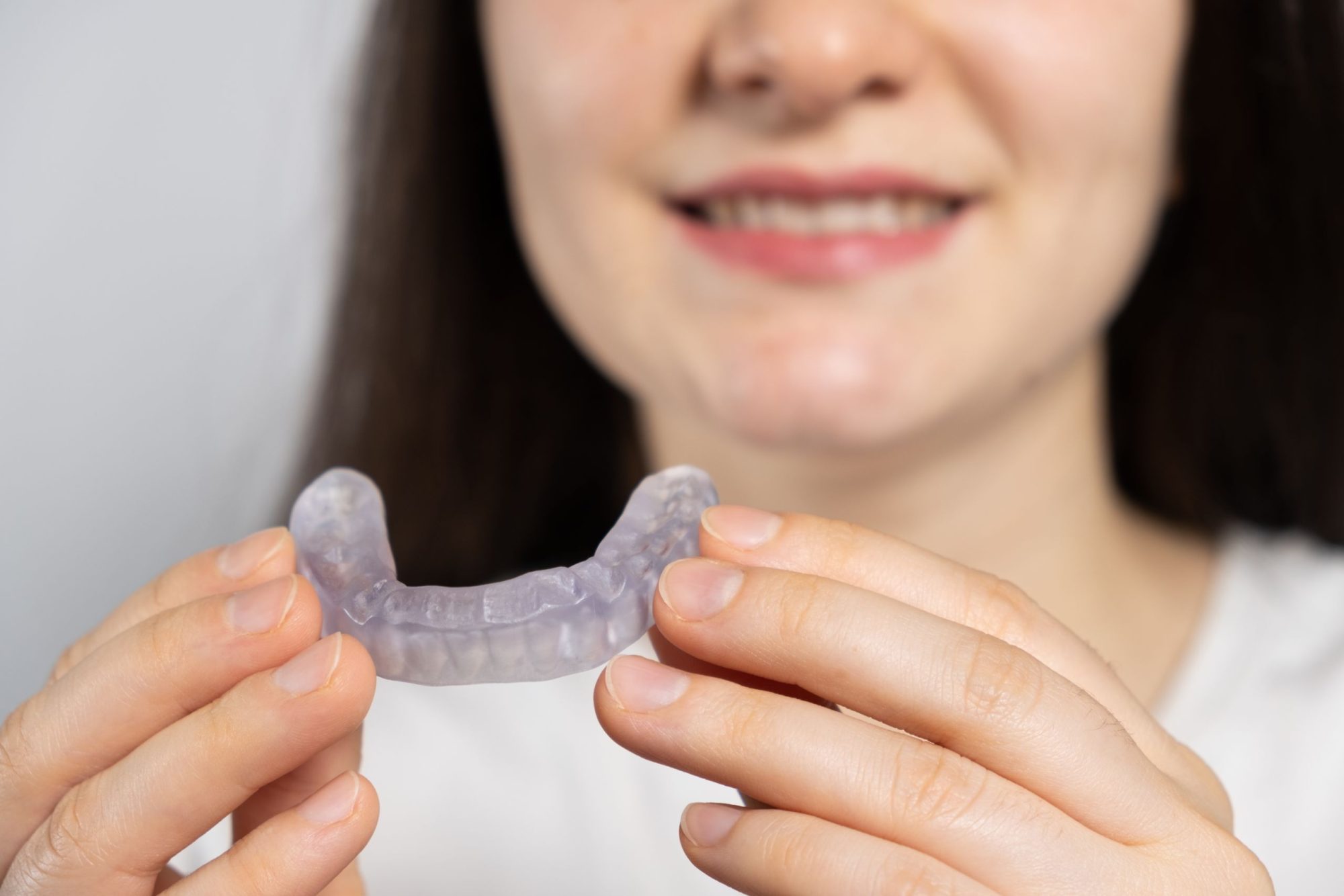
A custom TMJ splint is a different category of appliance. While both products sit over your teeth during sleep, a clinical splint is fabricated with a specific therapeutic purpose: to reposition the jaw, reduce stress on the temporomandibular joint, and establish a stable occlusal position that allows the surrounding muscles to relax.
Research published in PMC found that occlusal splint therapy is an effective, noninvasive treatment approach for TMD, with custom splints demonstrating improvements in pain reduction, jaw function, and patient-reported outcomes across multiple splint types and fabrication methods. A properly designed splint addresses the source of the dysfunction, not just the symptom of tooth wear.
How We Fabricate Custom Splints at Our Practice
The process matters as much as the product. At Kabani Dental, we use digital impressions and in-house 3D printing technology to fabricate custom splints and night guards with a level of precision that traditional lab methods cannot always match. Our 3D printers produce appliances from durable, biocompatible materials that fit your dentition exactly. There is no back-and-forth with an outside lab, and no waiting weeks for your appliance to arrive.
Dr. Shaila Kabani also brings a specialized clinical background in TMJ and splint therapy to every case. Before any appliance is created, she conducts a thorough evaluation of your bite, jaw alignment, and symptoms to determine the right type of splint for your situation.
Key Differences at a Glance
The contrast between OTC guards and custom splints comes down to a few core factors:
- Fit: Custom splints are fabricated from precise digital impressions; OTC guards are self-molded approximations
- Material: Clinical-grade appliances use durable, accurately calibrated materials; boil-and-bite guards are typically soft thermoplastic
- Purpose: Custom splints are designed to address specific jaw dysfunction and occlusal issues; OTC guards primarily provide a buffer between teeth
- Longevity: A well-made custom splint will outlast multiple pharmacy guards and hold its form under nightly use
Choosing the right appliance starts with understanding what is actually causing your symptoms. Jaw pain, morning headaches, clicking or popping in the joint, and tooth sensitivity are all signs worth discussing with a dentist who understands general dental health and bite mechanics together.
What is the difference between a TMJ splint and an over-the-counter night guard?
A custom TMJ splint is a precision-fabricated appliance designed to reposition the jaw and reduce stress on the temporomandibular joint. An over-the-counter night guard is a thermoplastic boil-and-bite device that creates a buffer between your teeth but does not address jaw alignment or the underlying causes of bruxism. The fit, material, and clinical purpose of each are fundamentally different.
How does Dr. Kabani determine which type of appliance I need?
Dr. Kabani performs a thorough evaluation of your bite, jaw alignment, and symptoms before recommending any appliance. She considers whether you have true TMJ dysfunction, the severity of bruxism, and how your bite distributes pressure. That evaluation guides the decision between a standard night guard and a therapeutic TMJ splint.
How long does it take to get a custom TMJ splint at Kabani Dental?
Because Kabani Dental uses digital impressions and in-house 3D printing technology, the fabrication process is faster than traditional lab-based methods. In many cases, your custom appliance can be ready without the extended wait times associated with outside lab work. Your care team will give you a specific timeline at your consultation.
Can a custom TMJ splint help with morning headaches and jaw soreness?
Many patients who experience morning headaches, jaw soreness, or facial tension related to clenching and grinding find that a properly fitted custom splint helps reduce those symptoms over time. Because the splint addresses occlusal imbalances and reduces stress on the joint and surrounding musculature, it targets the source of discomfort rather than simply creating a barrier.
Get the Right Answer From Kabani Dental
Dr. Kabani has been practicing dentistry for over two decades and holds advanced Pankey Institute training, with a specialized focus on TMJ and splint therapy. She takes a comprehensive approach to jaw-related concerns, assessing not just the teeth, but the entire masticatory system, before recommending any treatment. You can learn more about her background and our practice philosophy on our about us page.
If you have been living with jaw pain, grinding, or unexplained bite discomfort, a proper evaluation may be all it takes to find a lasting solution. Contact our office to schedule a consultation with Dr. Kabani and find out whether a custom splint is the right next step for you.
About the Author
Dr. Shaila Kabani
Kabani Dental, Marietta, GA
Dr. Shaila Kabani has been practicing dentistry since 2000 and has accumulated more than 300 hours of advanced clinical education. She and her team serve patients throughout Marietta, East Cobb, Vinings, and Smyrna, providing comprehensive general, cosmetic, and restorative dental care with a personalized approach at every appointment.